THE LOOK
Why it was called crazy
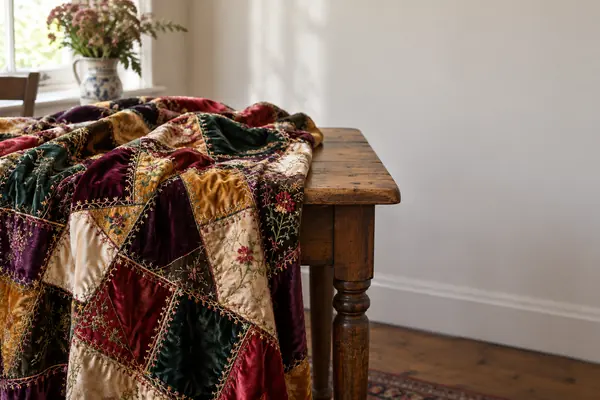
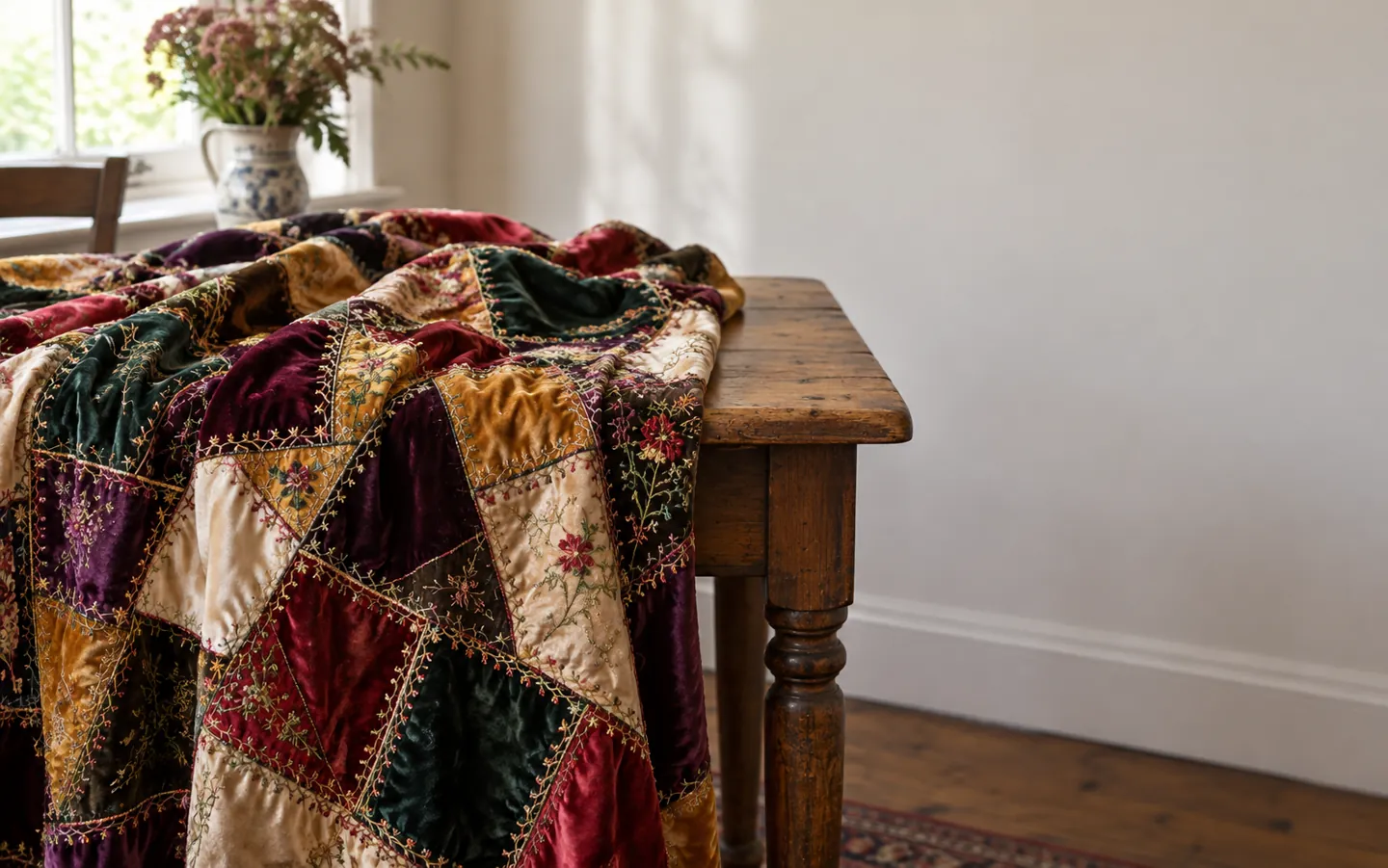
The V&A says the name came from the seemingly random placement of brightly coloured velvets, satins, twills and other fabrics, helped by vivid new chemical dyes.
What was it for? doodlecrazy
WHAT THE MUSEUMS SAY
No grid, no pattern, no two pieces alike.
1880s the height of the craze
≈ 10million Americans who visited Philadelphia's world's fair
In the 1880s scraps of velvet, satin and silk were pieced at random and every seam was smothered in embroidery. Museum collections in Britain and America still hold the results. Here is how the craze worked.
THE SHORT ANSWER
Crazy patchwork looks haphazard.
Makers spent months, even years, on one piece.
THE LOOK
The V&A says the name came from the seemingly random placement of brightly coloured velvets, satins, twills and other fabrics, helped by vivid new chemical dyes.
What was it for?THE STITCHES
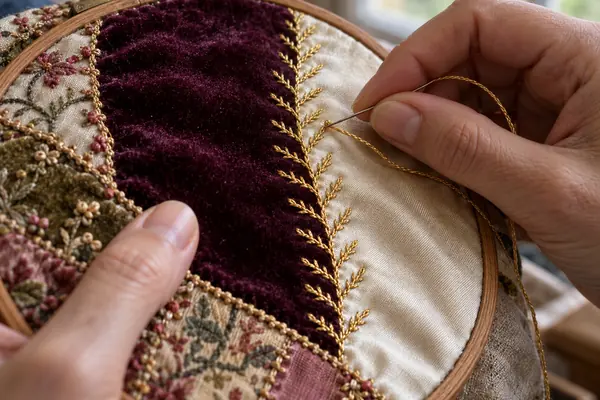
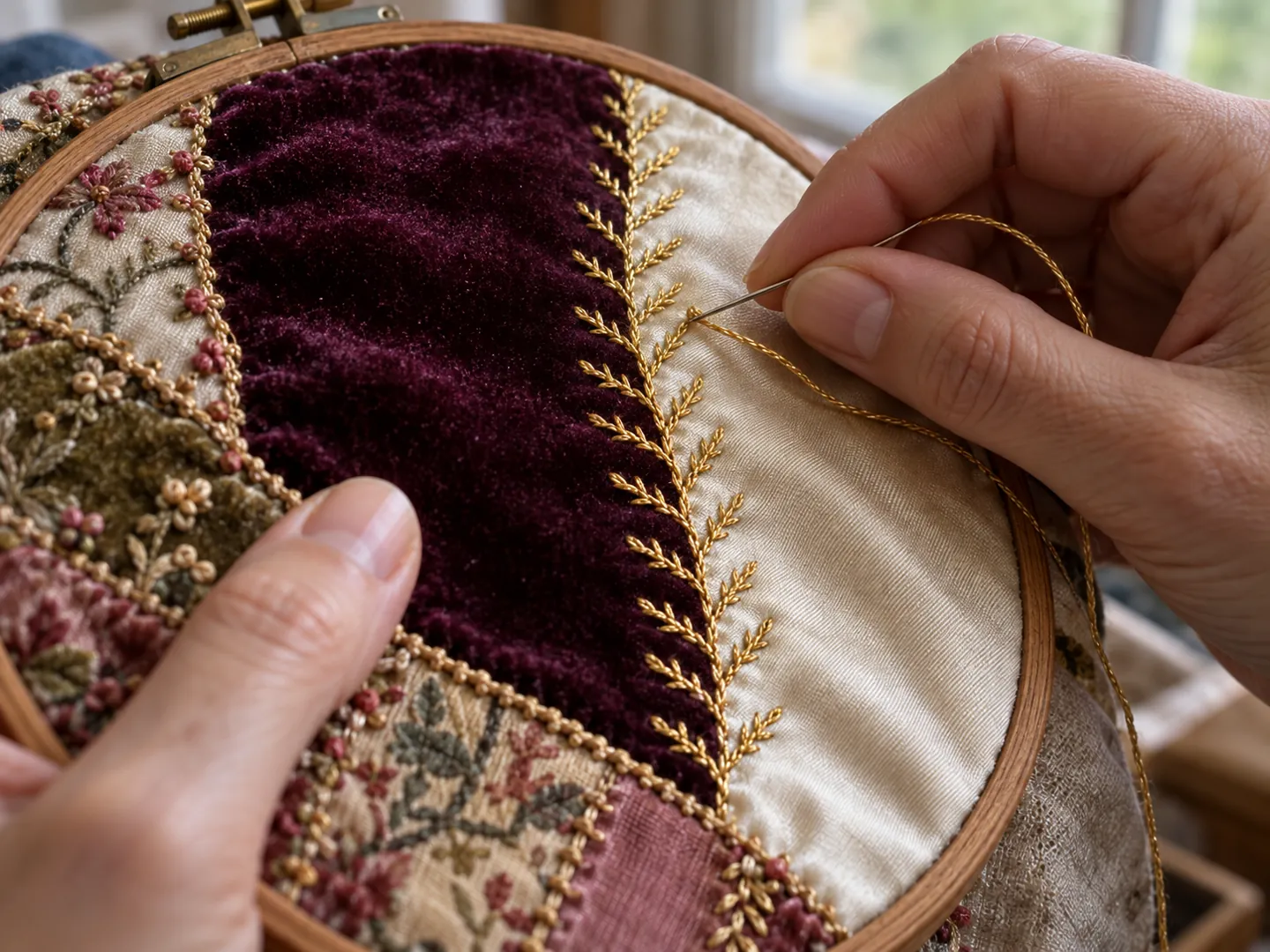
A crazy patchwork strip at Museum Wales has its seams oversewn with feather, buttonhole and herringbone stitch, with French knots throughout, in ten colours of silk thread.
Try the stitchesTHE MOTIFS
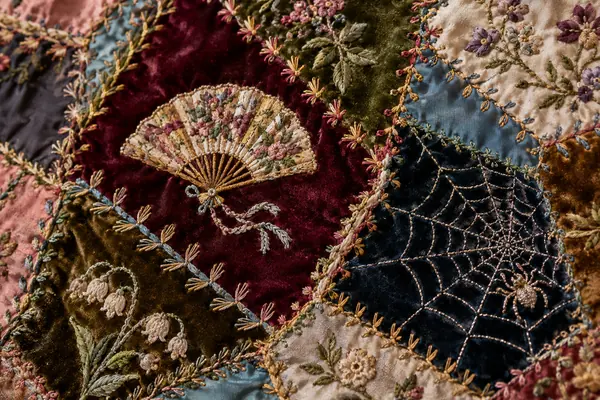
Museum pieces show recurring motifs: the Japanese fan, peacock feather, spider's web and tennis racket, alongside flowers, birds and insects.
Where it came fromA QUICK OBJECT CHECK
Crazy patchwork was not only for beds. Pick an object to see how it was used. The bar shows the rough scale of the job, from small bags to full quilts.
Object types from the V&A's description of crazy patchwork; sizes from objects in UK museum collections.
MAKE A SMALL BLOCK
These steps follow how museum pieces were made. A small block, like a cushion front, is a good first project.
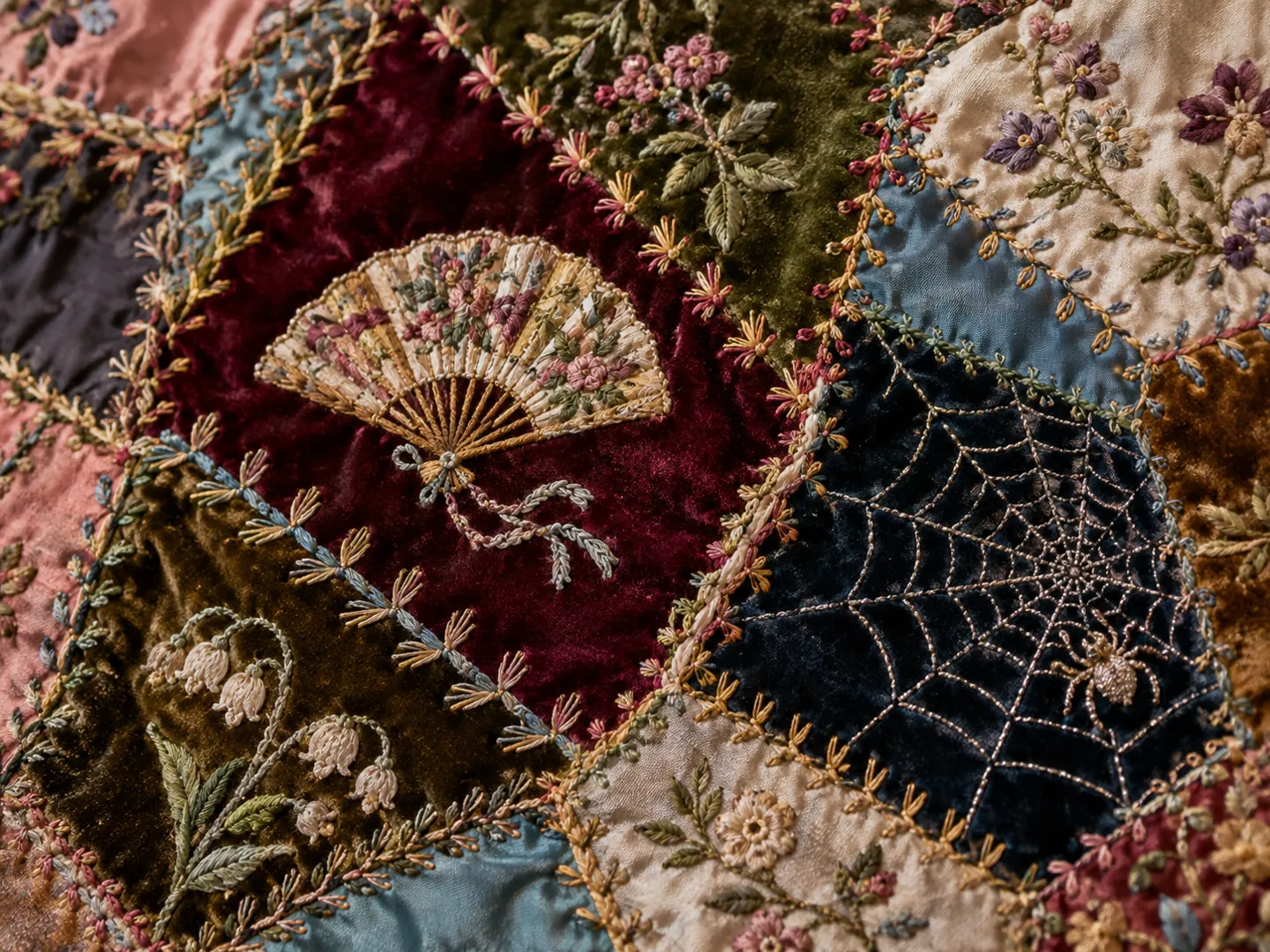
Victorian makers used silk, satin, velvet, brocade and twill. Today the Hennepin History Museum notes a revival among people repurposing fabric.
Lay irregular shapes edge to edge on a backing cloth. On the Museum Wales piece the embroidery goes through both the patchwork and a cotton backing.
Oversew the joins with feather, buttonhole or herringbone stitch. The RSN describes feather stitch as fly stitches worked alternately left and right.
Fill plain patches with small embroidered motifs: flowers, a fan, a spider's web, initials and a date, as makers did in the 1880s and 1890s.
TWO NUMBERS WORTH KNOWING
One figure on where the look may have come from,
one on how much went into a single small piece.
≈ 10million
Americans who visited Philadelphia's world's fair
Nearly ten million Americans visited the 1876 fair, where Japan's pavilion was among the most popular. Historians and quilters generally agree the crazy quilt's asymmetry was inspired by Japanese art.
1876 CENTENNIAL EXPOSITION · HENNEPIN HISTORY MUSEUM
10colours
Colours of silk thread in a 215 × 605 mm strip
A crazy patchwork piece from Maentwrog, early 1900s, combines satin, velvet, brocade and shot silk, with ten different colours of silk embroidery thread.
ONE SMALL PIECE · MUSEUM WALES
The V&A notes that magazines of the day also called the style 'Japanese' or 'kaleidoscope' patchwork.
WHY IT FADED
By the 1880s silk makers were selling sets of scraps and magazines printed patterns and kits. The Hennepin History Museum says kit-made pieces tended to be less ornate than free-form ones.
In the early twentieth century ornament gave way to practical design and the laborious style fell from favour. It survives in public collections, and is enjoying a revival with makers who reuse fabric.
Questions
The V&A says the name came from the seemingly random placement of brightly coloured fabrics such as velvets, satins and twills. Magazines also called it 'Japanese' or 'kaleidoscope' patchwork.
Mostly they were decorative. The Hennepin History Museum notes that, unlike quilts made for bedding, crazy patchwork was highly embellished, and the V&A lists cushions, piano covers, table covers, sofa pillows and bags among its uses.
Its true origin is unknown. Historians and quilters generally agree the look was inspired by Japanese art, which many Americans first saw at Japan's pavilion at the 1876 Centennial Exposition in Philadelphia.
Museum pieces show feather stitch, buttonhole stitch and herringbone stitch along the seams, with French knots. The Royal School of Needlework notes that feather stitch has been used to piece together crazy quilts.
Examples are held by the V&A, by the Quilters' Guild collection at the Quilt Museum and Gallery in York, which has an embroidered coverlet dated 1886, and by Museum Wales at St Fagans. Check before visiting that a piece is on display.
Updated
ABOUT THIS NAME
doodlecrazy.com is part of the DoodleSale portfolio. It isn't in an auction right now, but you can ask about leasing it.